Showing posts with label Places and People. Show all posts
Monday, October 14, 2013
Thursday, October 3, 2013
On the lighter :-) side of matters...
I always wondered how language evolved around the neighbouring states. To an outsider Tamil and Malayalam sounded similar and many
people who lived in the boarders of Tamil Nadu and Kerala also easily switched
from one language to another while conversing. As a malayalee who spoke
kottayam Malayalam at home always, I was amused by certain Tamil words.
Malayalam and Tamil do share a lot of words in common but what would seem a
simple word in Tamil could be a high sounding extreme one in Malayalam.
Few
words and their usages in the two languages which I noticed
Mudinju:
Tamil : Completed/ finished. It could refer to a task
completed.
Malayalam: Destroyed/ Finished: Would mean something which
was finished due to destruction.
Vilayattam :
Tamil : Play.
Malayalam: Play (with a negative connotation). For example a
mom who’s really upset with her child who’s been playing for long could scold
the child saying “It’s high time you stop your vilayattam and come home”. A
catty action could be referred to as a “Vilayattam”
Thungal
Tamil : Sleeping
Malayalam : Hanging
Thaandi :
Tamil: Crossed. Could be used as “ I just crossed the check
gate”
Malayalam: Giant leaps.
Parishuddha Aavi (Christian Concept)
Tamil : The Holy Spirit
Malayalam: Holy steam
Pudichu
Tamil : Liked
Malayalam: Obsessed
Finally during this recent TN visit and while administering questionnaires
to the community (people always spoke in Tamil which was either translated for
me or sometimes I just understood) I almost always observed that the response
to the question “do you the know the modes of HIV transmission” would start
with “Udal Uravu, …., …., etc”. The interpreter would go “sex, …, …., etc.” I couldn’t
stop smiling each time it was said. Obviously “Udal Uravu” meant “Sex” in Tamil
and guess what it means in Malayalam. It
means “rubbing of bodies”. Imagine what can cause AIDS ! :-) :-)
Monday, September 30, 2013
T N Highs
My visit
schedule was two days in Madurai and two days in Salem.
The outskirts
of both the districts and the way to surrounding villages had a lush green
appearance because of the acres of paddy fields, sugarcane crops, fruit
orchards and the coconut palms. Looks like the state is busy producing food
abundantly. That’s quite an encouragement for the growing food insecure
population.
The highways
are a plus point of the state. They look well maintained and are quite wide. I
loved the Volvo bus ride from Madurai to Salem, the many places that we passed
by. There were numerous residential schools, training institutions, higher
study institutes etc lined up all the way till Salem. The town roads had concrete pavements, which acted as speed-breakers, made provision for water seepage and also provided a neat look to the town. It called for less annual maintenance too.
I was
impressed by the women in the villages. They meant business. Most of them were
part of the self help groups and they did well in terms of saving, accessing
matching grants and benefiting from all schemes of the Govt. They lent money
to people in need within the community at low interest rates. They were into
income generation programs too.
Met quite a
few PLWHAs and it was encouraging to see how their lives have changed from a discriminated
and stigma affected lot to people who lived with dignity. One thing that really
stood up was that they kept themselves updated on all the new medicines and
research that came up on this and were inquiring about it to the staff of the organization.
The freebies
of Tamil Nadu’s political parties has been a topic of debate for sometime now.
Almost all the houses had colour TVs, free gas connection, all the school going
(9th grade above) and the college going young people have laptops,
free bicycles, , and so on…The freebies are
promises kept by the political parties in their manifestos.. The issue may
hinge on what a freebie is, what constitutes a social security net, and
defining the thin line that separates the two.
The sudden
increase in the levels of education in the state is surely contributed by the schemes
like granting Rs 500 a year for girls belonging to SC/ ST and most backward
classes studying in Class III to V and Rs 1,000 to those in Class VI to VIII,
or free bus passes to all students. Free sanitary napkins are distributed to
girls studying in rural schools. It was encouraging to see that Tamil Nadu is
actively promoting the scheme under which a girl belonging to the BPL category
can get marriage assistance of Rs 20,000, and another under which she can get
one or two grams of gold for her mangalsutra.
These are linked to her educational qualifications. This acts as an
added incentive for the parents to educate the girls at least till 10th
grade.
Sunday, September 29, 2013
Madurai and Around
On de-boarding
the train in Madurai Junction Railway Station, early Monday morning last week,
I was couldn’t help but notice the neat, modern and traveler friendly railway
station. The availability of many facilities viz travel amenities shop, battery
cars for aged and disabled, purified water. ATM kiosks etc were noticeable. The
station also had escalators and those were functional too. Later I learned that
the station is the headquarters of the Madurai railway division of the Southern
Railways and is an A1 graded train station by the Indian Railways for being one
of the top 100 booking stations in the country.
![]() |
| From the day , the escalators were inaugurated in Madurai Junction |
The train reached earlier than the arrival, so
I had to wait outside till someone came to pick me up. While I waited, the cab
drivers kept on offering to drop me to my place of stay, which I myself didn’t
know. Knowing my hosts, I had conveniently packed my bags and had arrived in
the town confident that they would make arrangements to pick me up and so they
did.
This was my
second visit to the town and this time on I decided that I have to observe the
life in and around Madurai, a little more closely. During my last visit, I had
visited the famed Minakshi Temple. Madurai is also called the “Athens of the
East”, probably because of its historical significance and antiquity. The city
has preserved its ancient looks along with modern facilities.
I was put up
in a hotel just opposite the famous American College.
Curious, I googled the
history of the place and an article read
“It is narrated in legend that Madurai was originally a forest known as
Kadambavanam. One day, a farmer named Dhananjaya who was passing through the
forest, saw Indra (The king of the gods), worshipping a swayambhu (self created
Lingam ) under kadamba tree. Dhananjaya, the farmer immediately reported this
to King Kulasekara Pandya. Kulasekara Pandya cleared the forest and built a
temple around the Lingam. A city was soon planned with the temple as its
centre. On the day the city was to be named, Lord Shiva is said to have
appeared and drops of nectar from his hair fell on the town. So, the place was
named Madurai - mathuram meaning "sweetness" in Tamil.”
![]() |
| The American College, Madurai |
The
following days, I visited various villages with the staff of the host
organization and met several people and groups around Madurai. The visits were
interesting and there are many experiences I would like to relate here in
excerpts. Hoping that it will make an interesting read.
Tuesday, April 19, 2011
What surprises me about Hargeisa
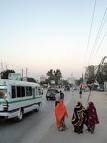
Hargeisa - The overall look of the town, the hustle bustle, the dusty roads and the little shops all around always reminded me of small towns in the rural India. The visible difference is in the attires of people and the big imported cars on the road. Looked at from close quarters, Somali society has loads of surprises for someone who is on a visit to this part of the world for the first time.
Out on the roads, one would find lots of women clad in their traditional dress (Dirreh) which is a long, kaftan sleeved, colourful gown with a head scarf (Massar) and a shawl (Shalmath) wrapped around the upper part of the body, moving around busily on the streets. The strength of Somali women has always surprised me. Many of them manage the household chores, look after the children and also are the breadwinners for the family. Usually the numbers of children in Somali households are quite high. The numbers could range from four to fifteen from just one woman. Having two kids myself, I can imagine the mammoth task these mothers have at hand, just around their children. But we see here that a woman’s responsibility cannot be limited to reproductive duties alone but she also has to take the mantle of being the one responsible to bring money home. One would find women doing several jobs which in other parts of the world is purely men’s job- for example if you go to the meat market, you will see women butchers. The surprising fact is that the butchers here are always women.
Talking about the vegetable market, yes it is always so crowded and mostly with women. Sometimes one can see women with faces all coated with pastes of different colors and textures. That’s a unique feature in Somali society; one can go out with a face mask on for shopping. I can understand, with the busy schedule that a Somali woman has, one cannot put on a face mask and wait for it to dry and then wash before going out- every moment counts. A Somali woman never misses out on her beauty regimen even with her busy schedule, especially treating the skin with masks (made of chick peas flour, turmeric and other Somali ingredients) and the hair with henna regularly.
The resilience of the Somalilanders has always been surprising and inspiring to me. Having gone through severe hardships and trauma owing to the civil war during Siad Barre’s regime, having lost many of their near and dear ones, having to flee and be in exile for years, the way they have bounced back is worthy of appreciation.
Somaliland has been trying to be accepted by the international community as a separate nation with Hargeisa as its capital since long but is not yet successful. An independent state with a stable democratically elected government the recognition is long due but surprisingly, outsiders are not aware of its existence but are only aware of it as Somalia (with Capital Mogadishu), although many international aid agencies and the UN offices operate from Hargeisa.
Out on the roads, one would find lots of women clad in their traditional dress (Dirreh) which is a long, kaftan sleeved, colourful gown with a head scarf (Massar) and a shawl (Shalmath) wrapped around the upper part of the body, moving around busily on the streets. The strength of Somali women has always surprised me. Many of them manage the household chores, look after the children and also are the breadwinners for the family. Usually the numbers of children in Somali households are quite high. The numbers could range from four to fifteen from just one woman. Having two kids myself, I can imagine the mammoth task these mothers have at hand, just around their children. But we see here that a woman’s responsibility cannot be limited to reproductive duties alone but she also has to take the mantle of being the one responsible to bring money home. One would find women doing several jobs which in other parts of the world is purely men’s job- for example if you go to the meat market, you will see women butchers. The surprising fact is that the butchers here are always women. The shopping for the household is always done by the women, it is embarrassing for a man to be seen shopping for vegetables and grocery. I have never seen a Somali man carrying his kid/s around. Someone told me that it is not accepted for men to be taking care of kids or even carrying them. I have few experiences myself about the disapproval. The recent one was when we came out of the shopping mall and were waiting for the driver who had gone to pray. As usually J was carrying Yohan and Tejas was holding on to my hand. As we waited, few men sipping tea in the tea stall nearby offered a seat to J with biting remark to me mentioning how he needs a break.
Talking about the vegetable market, yes it is always so crowded and mostly with women. Sometimes one can see women with faces all coated with pastes of different colors and textures. That’s a unique feature in Somali society; one can go out with a face mask on for shopping. I can understand, with the busy schedule that a Somali woman has, one cannot put on a face mask and wait for it to dry and then wash before going out- every moment counts. A Somali woman never misses out on her beauty regimen even with her busy schedule, especially treating the skin with masks (made of chick peas flour, turmeric and other Somali ingredients) and the hair with henna regularly.
The resilience of the Somalilanders has always been surprising and inspiring to me. Having gone through severe hardships and trauma owing to the civil war during Siad Barre’s regime, having lost many of their near and dear ones, having to flee and be in exile for years, the way they have bounced back is worthy of appreciation.
Somaliland has been trying to be accepted by the international community as a separate nation with Hargeisa as its capital since long but is not yet successful. An independent state with a stable democratically elected government the recognition is long due but surprisingly, outsiders are not aware of its existence but are only aware of it as Somalia (with Capital Mogadishu), although many international aid agencies and the UN offices operate from Hargeisa.
Wednesday, April 13, 2011
What I love about Hargeisa
This is the third time I am living in Hargeisa. The first visit was in 2004. J was already here few months back and insisted on me to join him, so had to say goodbye to my job with UNICEF in Orissa which I was really enjoying and had to fly down here. I had no inkling of how this place would. Whatever was my perceptions of Somalia/land was completely coloured by the way the media had painted it- not very good. So it was a mixed feeling, going to live in a new country and new people was exciting though.
I loved the little birds that make their homes in the thorny bushes and trees in Hargeisa. They are so many in number and the whole place, especially the residential areas are always so full of their chirps and shrieks that the environment can easily cheer a passerby.
There is something about Hargeisa which can relax one's nerve. The offices here usually function from 8 am to 2 pm and then everybody is home. The stress factor is less. One gets more time with the family and there is ample time to indulge in relaxing hobbies like reading, gardening, cooking etc. It is here that the first time I thought of blogging and had created a blog "Living Moments" (livingmoments.blogspot.com). The lovely breezy evenings are another treat in themselves.
Hargeisa brought me closer to God as I could experience Him in the stillness of everything. I had time to count my blessings and thank Him for everything in life. And the call to prayers 5 times a day would remind me to at least remember God during those times.
It is here in Hargeisa that Tejas was conceived in my womb. I was going through the training by UNDP and University of Hargeisa to be a faculty member in the Civil Service Institute then when I came to know of it. So, till today we make fun of Tejas calling him "Manufactured in Hargeia", "Product of Hargeisa" etc.

I wasn't very impressed by the flights after Dubai, I had to fly from there to Djibouti, had a brief break there and then took the small aircraft to Hargeisa. Already suffering from a terrible headache from the previous day and a sleepless night in Dubai, Djibouti's intolerable heat was too much for me. To add on to it, a 250 ml water bottle cost US $ 1/- (then Rs. 45/-) which was really shocking for an Indian who in Orissa could afford a whole meal with it.
The small aircraft to Hargeisa was even horrible- with the seat belts broken and the seats were so crammed like the Orissa buses and I couldnot make out what was wrong with the airconditioning of the craft. The heat was intense and the passengers were in demand of water every now and then. The French hostess in the craft would pass on a jug of water and later they ran out of water too and all this while I was wondering whether I would ever be able to reach my destination at all. Nausea and headache had overpowered all my senses. Thanks to God, the gruelling 45 minutes were over and we landed safely. I took my bags and started for the exit and as the door was opened a lovely cool breeze blew on my face and I was suprised and the expression was so evident on my face, the two Danish women whom I had befriended while in Djibouti and who were aware of my condition smiled and one instantly mentioned "that's Hargeisa for you, the land of the lovely breeze". What a relief ! I have always loved that cool breeze of Hargeisa since then.
Then started my sojourn with Somaliland and its people. The people were friendly and their hospitality always amazed me. They loved inviting us to their homes and lovely feasts would be served at dinner. I have always loved the food that our Somali friends treated us to, in their homes but couldn't replicate it ever myself- whenever I tried it, was a disaster.
I loved the little birds that make their homes in the thorny bushes and trees in Hargeisa. They are so many in number and the whole place, especially the residential areas are always so full of their chirps and shrieks that the environment can easily cheer a passerby.
There is something about Hargeisa which can relax one's nerve. The offices here usually function from 8 am to 2 pm and then everybody is home. The stress factor is less. One gets more time with the family and there is ample time to indulge in relaxing hobbies like reading, gardening, cooking etc. It is here that the first time I thought of blogging and had created a blog "Living Moments" (livingmoments.blogspot.com). The lovely breezy evenings are another treat in themselves.
Hargeisa brought me closer to God as I could experience Him in the stillness of everything. I had time to count my blessings and thank Him for everything in life. And the call to prayers 5 times a day would remind me to at least remember God during those times.
It is here in Hargeisa that Tejas was conceived in my womb. I was going through the training by UNDP and University of Hargeisa to be a faculty member in the Civil Service Institute then when I came to know of it. So, till today we make fun of Tejas calling him "Manufactured in Hargeia", "Product of Hargeisa" etc.
| Eid Lunch 2006- at a friend's place. |
Subscribe to:
Posts (Atom)